
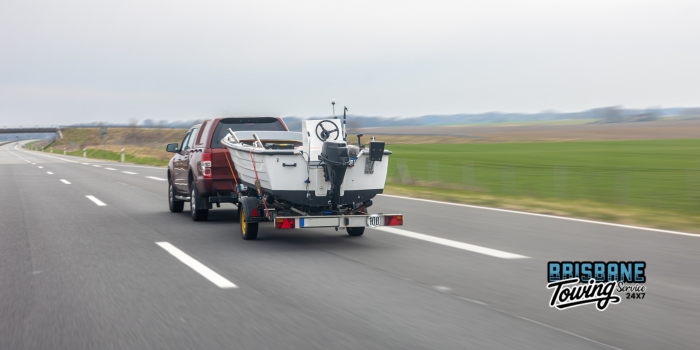
A boat is one of the most expensive things a Brisbane family owns. And one of the least thought-about when it comes to transport.
Most boat owners spend hours researching the right hull, the right engine, the right trailer setup. Then when it comes time to move the boat to a marina, to a repair yard, to a new storage facility, or after a breakdown they hand it to whoever answers the phone first.
That decision matters more than most people realise until the boat comes back with something wrong.
This is what professional boat towing actually protects against and why getting it right from the start is always cheaper than fixing what goes wrong when it is not.
What Can Actually Go Wrong During Boat Transport
Before anything else, it is worth understanding why boat towing is not like towing a car.
A car sits on four wheels and has a chassis built to handle tie-down points. A boat sits in a trailer cradle, is shaped in a way that concentrates load onto specific hull contact points, has an outboard or inboard engine hanging off the transom, and often has electronics, aerials, biminis, and covers that extend beyond the hull itself.
Every one of these elements is a potential damage point when the towing is not done correctly.
Hull and Keel Contact Damage
When a boat is loaded onto a trailer without proper cradle positioning, the hull sits on hard points instead of spreading load evenly across padded supports. Over a 40-kilometre tow on Queensland roads with their mix of smooth motorway and rougher suburban surfaces concentrated pressure on the wrong part of a fibreglass hull leaves impressions, stress cracks, and in worse cases, structural delamination that is invisible from the outside and expensive to repair properly.
Transom Stress
The transom is where the engine mounts. It is not designed to carry lateral or twisting loads, it is designed to resist the forward thrust of the engine in water. When a boat is improperly secured during road transport and shifts side to side, the transom carries that movement. Over time and distance, this creates stress in exactly the area where structural failure is most expensive to address.
Electronics and Aerial Damage
GPS units, VHF aerials, sonar transducers, bimini frames, and rod holders sit above the hull line. Without proper height clearance checks and protective covering during transport, these components make contact with low branches, underpasses, or simply vibrate themselves loose on rough roads. Individually, each one is a minor repair. Combined across a single careless tow, they add up.
Trailer Mismatch
Not every trailer suits every boat. A trailer with the wrong beam width, wrong keel support positioning, or incorrect bunks for a deep-V hull creates contact points that damage the hull from the first moment the boat sits on it. A professional boat towing operator assesses trailer suitability before loading — not after the boat has been sitting on the wrong supports for an hour.
Explore These Helpful resources also:
How Professional Motorcycle Towing Protects Your Bike
What Every Brisbane Driver Must Do Immediately After A Highway Breakdown
Brisbane Drivers Are Ignoring Vehicle Warning Signs
The Right Way To Move Any Shipping Container Safely
Cradle Tow Truck: When And Why It Is Used
What Professional Boat Towing Actually Looks Like
A professional boat towing job is methodical before the boat moves a single metre.
Condition Assessment Before Loading
A professional operator documents the boat's condition before it is touched — photographs from all angles, noting any existing marks, scratches, or damage. This protects both the owner and the operator, and it establishes a clear baseline for what the boat looked like before transport began.
Correct Trailer and Cradle Setup
The trailer bunks, rollers, or cradle pads are positioned to match the specific hull shape of the boat being transported. For a deep-V hull, this means keel support along the centreline and padded contact at the correct beam width. For a flat-bottom vessel, the support distribution is different. Getting this right before loading is the single most important step in preventing hull damage.
Height and Width Assessment
Before the boat moves anywhere, a professional operator confirms the overall height with the boat loaded — including any aerials, biminis, or outboard tilt position — against the clearance restrictions on the planned route. Bridges, underpasses, and overhead powerlines are not guesses. They are pre-checked measurements that determine whether the route is viable or needs to change.
Correct Tie-Down Points and Strap Routing
Straps go to designated tow points on the trailer and the boat's structural members — not to fittings, cleats, or anything that can pull free under load. The strap angle matters. The tension matters. An experienced operator does not over-tighten straps on a fibreglass hull, because excess strap tension applied to the wrong point creates exactly the kind of localised hull stress that causes damage.
Permit Compliance for Oversized Loads
Boats wider than 2.5 metres require oversize permits in Queensland before they can legally travel on public roads. For larger vessels, pilot vehicle requirements may apply. A professional boat towing operator handles this before dispatch — not as a surprise on the road.
When Brisbane Boat Owners Actually Need Professional Boat Towing
After A Breakdown On The Water
If your boat breaks down at a ramp, a marina, or while on the water and needs to be retrieved and transported to a repair facility — the recovery process needs the right equipment and the right approach to avoid adding damage on top of whatever mechanical issue already exists.
Pre-Sale or Post-Purchase Transport
Buying a boat in a different suburb or selling one that needs to reach a new owner's location. Both situations require transport for a vessel that may not have been used recently, may have unknown condition issues, and where condition documentation at both ends of the journey matters.
Seasonal Storage Transport
Moving a boat to and from off-season storage is a routine transport job that many owners handle themselves — until the boat is large enough, or the storage location far enough, that the logistics become genuinely complex.
Insurance or Repair Facility Transport
After an incident, moving a damaged boat from where it is to where it needs to be for assessment and repair requires careful handling. A damaged hull needs more attention to loading and support positioning, not less.
Brisbane Towing Service for Your Boat
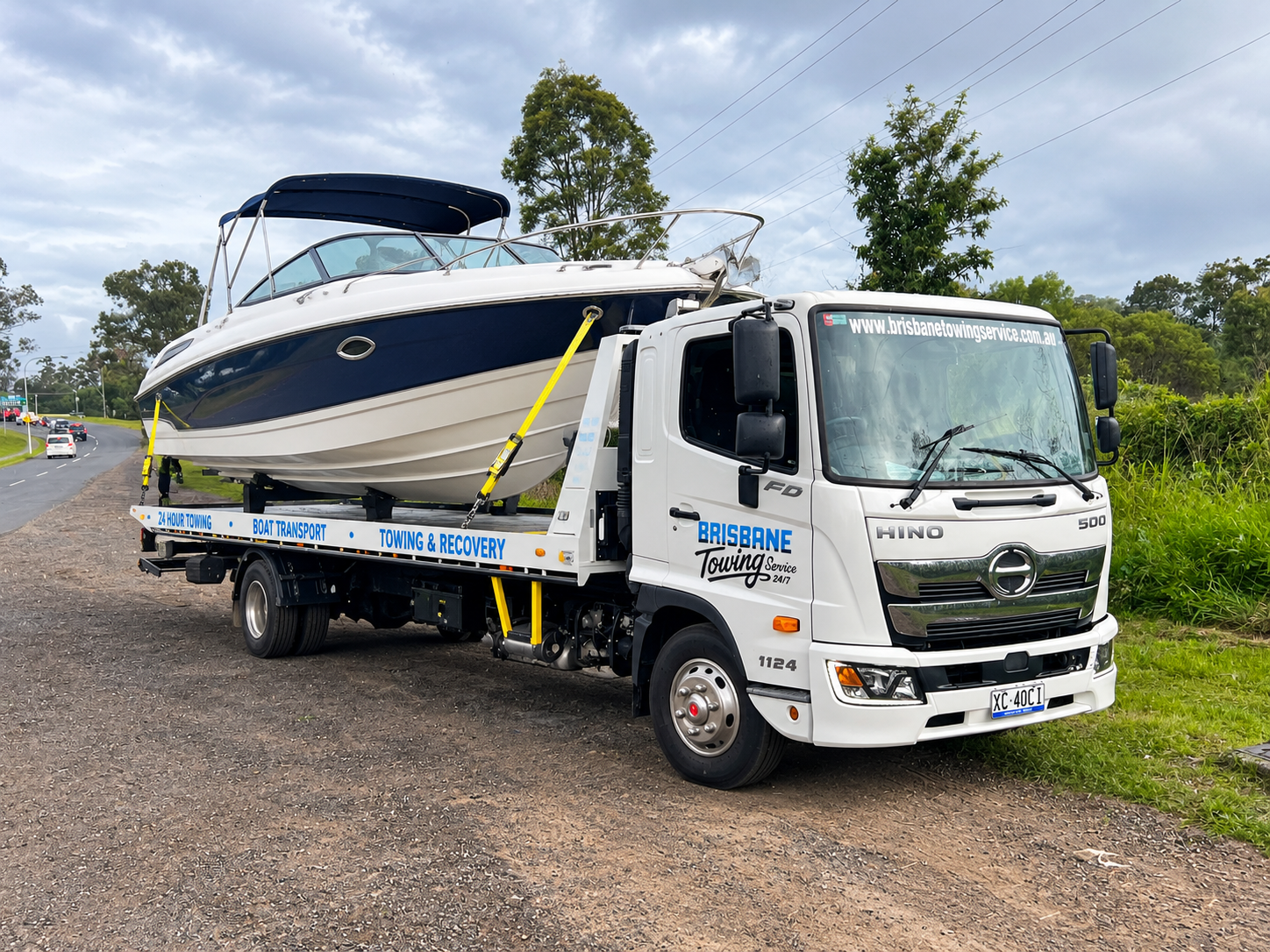
When your boat needs moving anywhere in Brisbane or Southeast Queensland, professional boat towing from Brisbane Towing Service means the job is done with the right equipment, the right technique, and the right attention to what is actually a significant investment.
Brisbane Towing Service 24*7 provides professional boat towing across Brisbane, Gold Coast, Logan, Ipswich, and surrounding areas. Every job includes condition documentation before loading, correct trailer and cradle positioning, height and route assessment, and full compliance with Queensland's oversize load requirements where applicable. Upfront pricing confirmed before any truck moves. Direct insurance billing for eligible jobs.