
A classic car that has been parked in a shed for ten years can almost always be moved, but the way it moves matters far more than how quickly it happens. Seized brakes, tyres that have gone flat and hard, and a gearbox nobody has touched in a decade all point to the same answer: the car should be loaded onto a flatbed and winched on gently, never dragged or hooked up and pulled down the road. If you're searching for a tow truck service nearby that actually understands old cars, this guide covers what to check first, how the move should be done, and what to look for in a carrier before anyone goes near your paintwork. Classic car towing Brisbane owners can trust starts with understanding the car, not just the truck.
Start With an Honest Look at the Car
Before you call anyone, spend ten minutes working out what the car can and can't do. Does it roll when pushed in neutral? Does the steering wheel actually turn the front wheels? Does anything bind or grind when a wheel turns? A car that rolls, steers and can be held in place is the easy case. One that won't roll, because a brake drum has rusted to the shoe, a wheel is missing, the gearbox has locked up or the suspension has collapsed, can still be moved, but it needs different equipment and the carrier needs to know before they arrive.
Take clear photos of all four corners and, if you can get a torch underneath, the chassis and floor as well. Note where the keys are, whether the handbrake is on, and whether anything is leaking. Honest details get you an accurate quote and the right truck on the first visit, while surprises on the day cost time and sometimes cause damage.
Why a Flatbed Is the Right Choice for a Car That Has Sat for Years
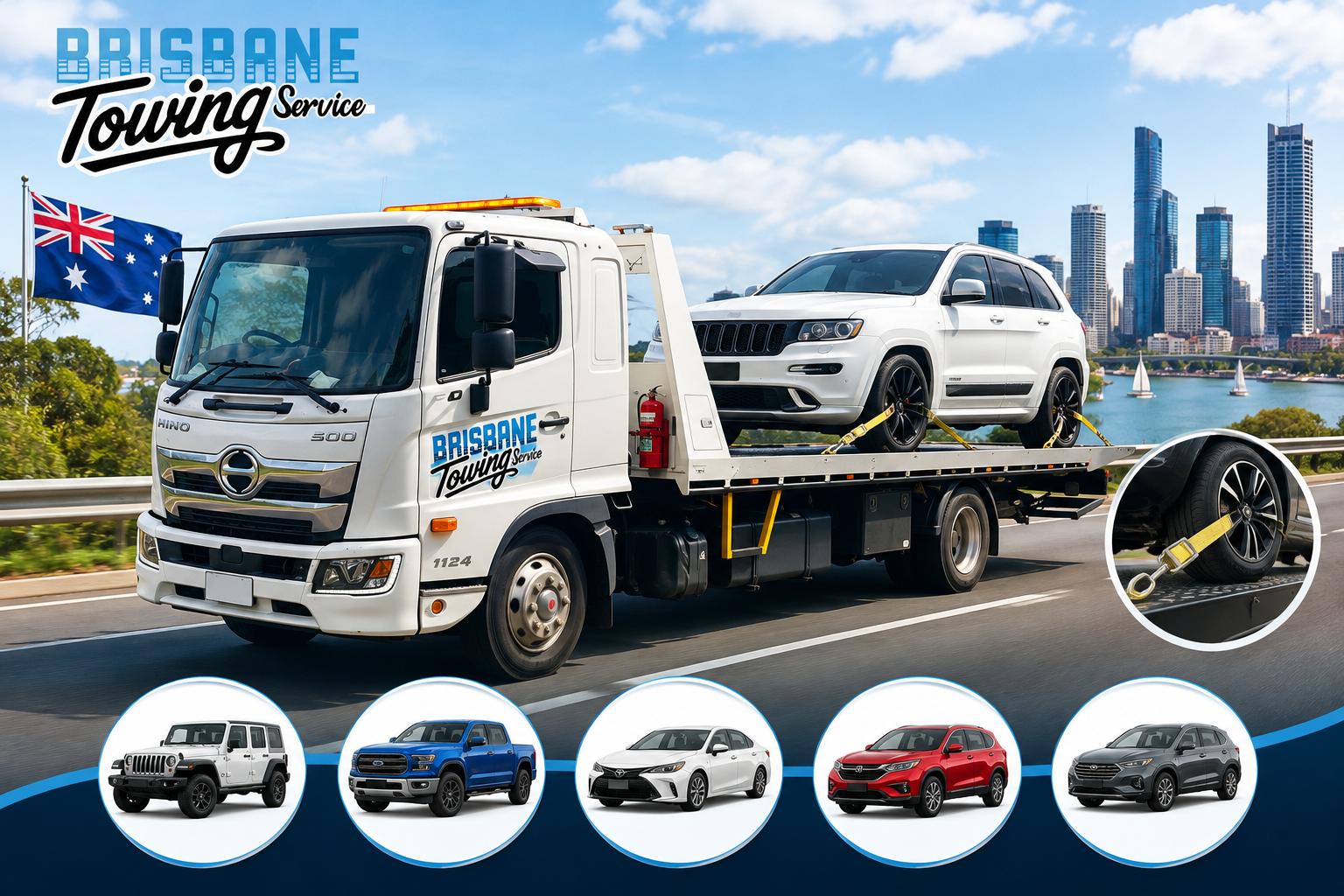
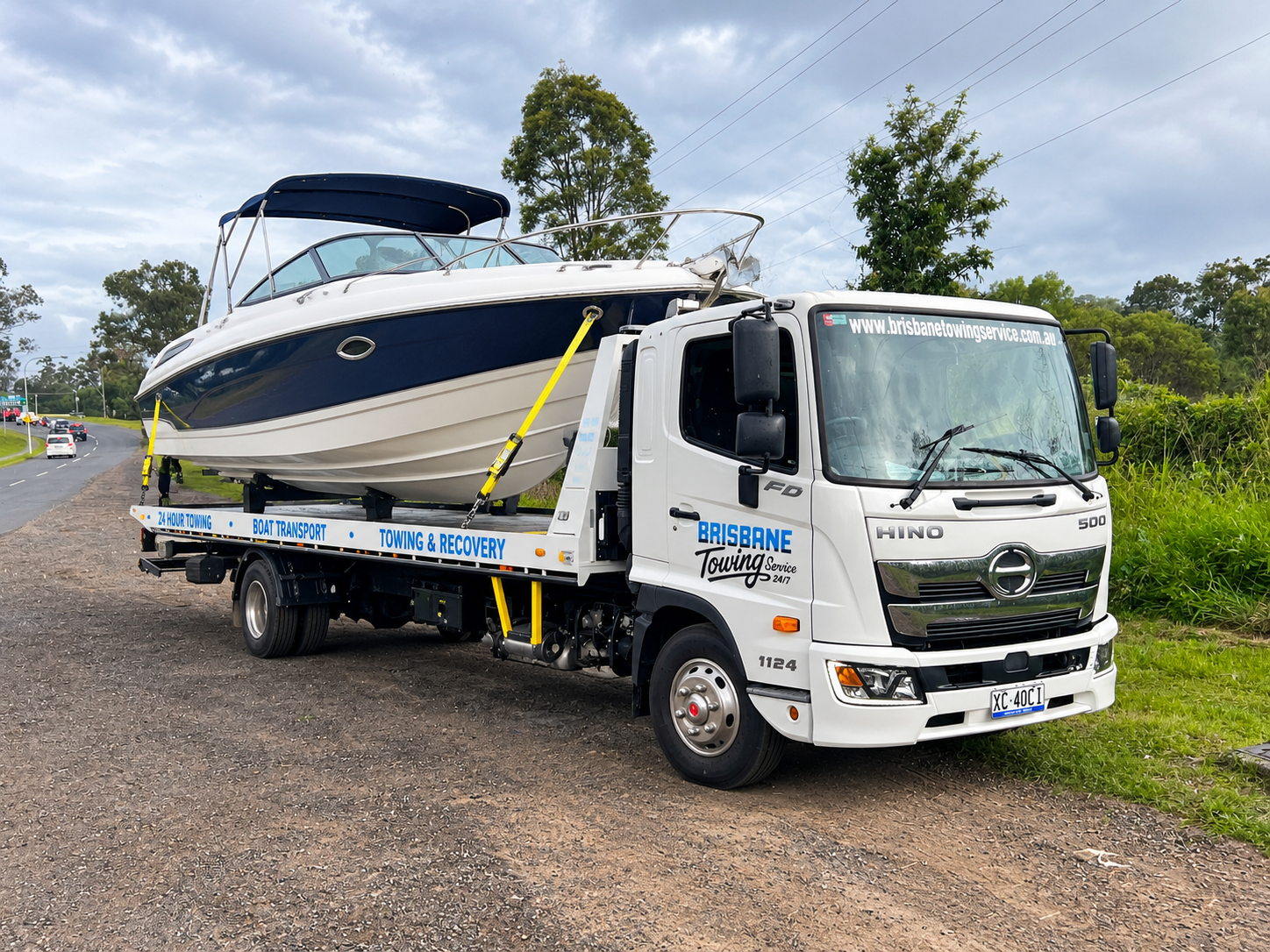
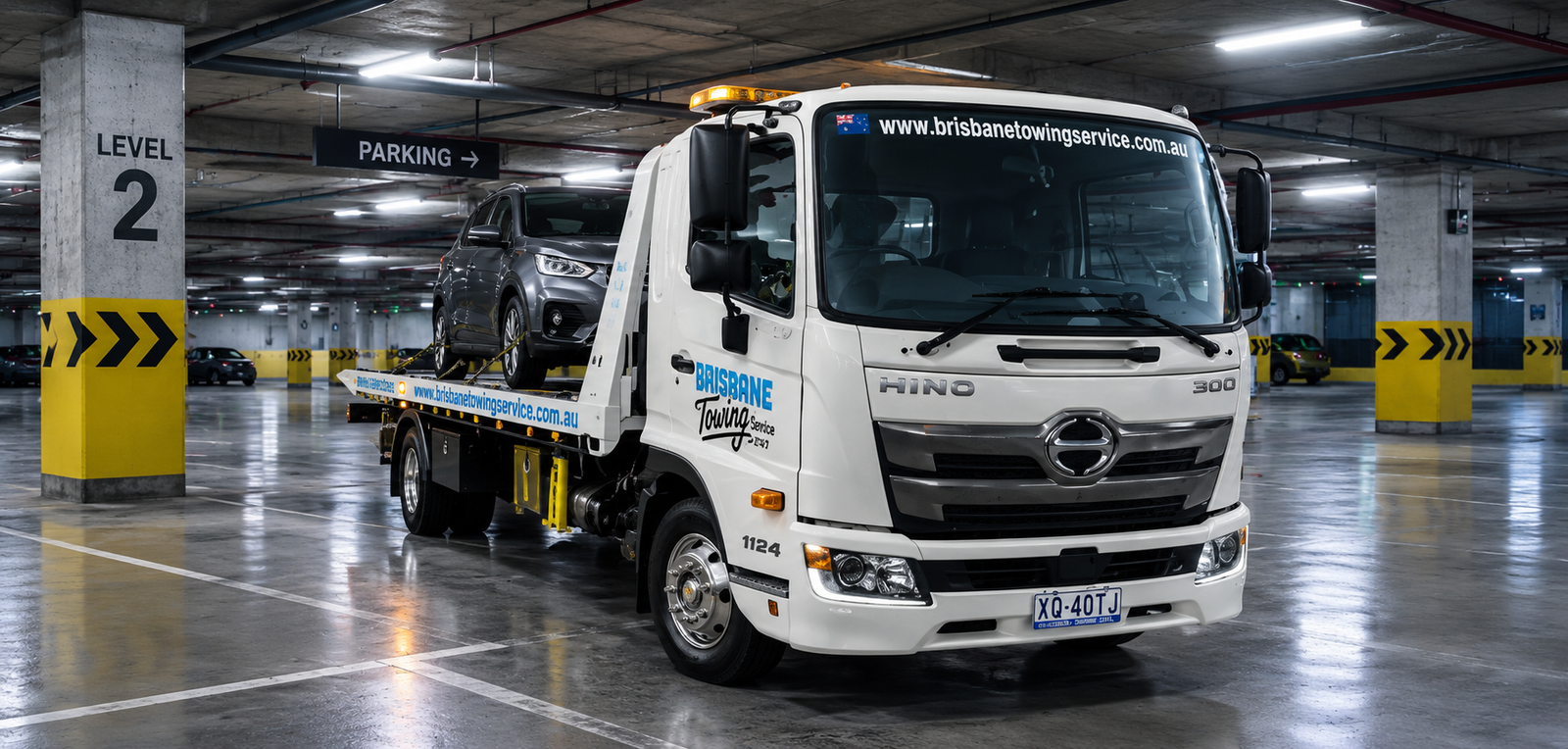
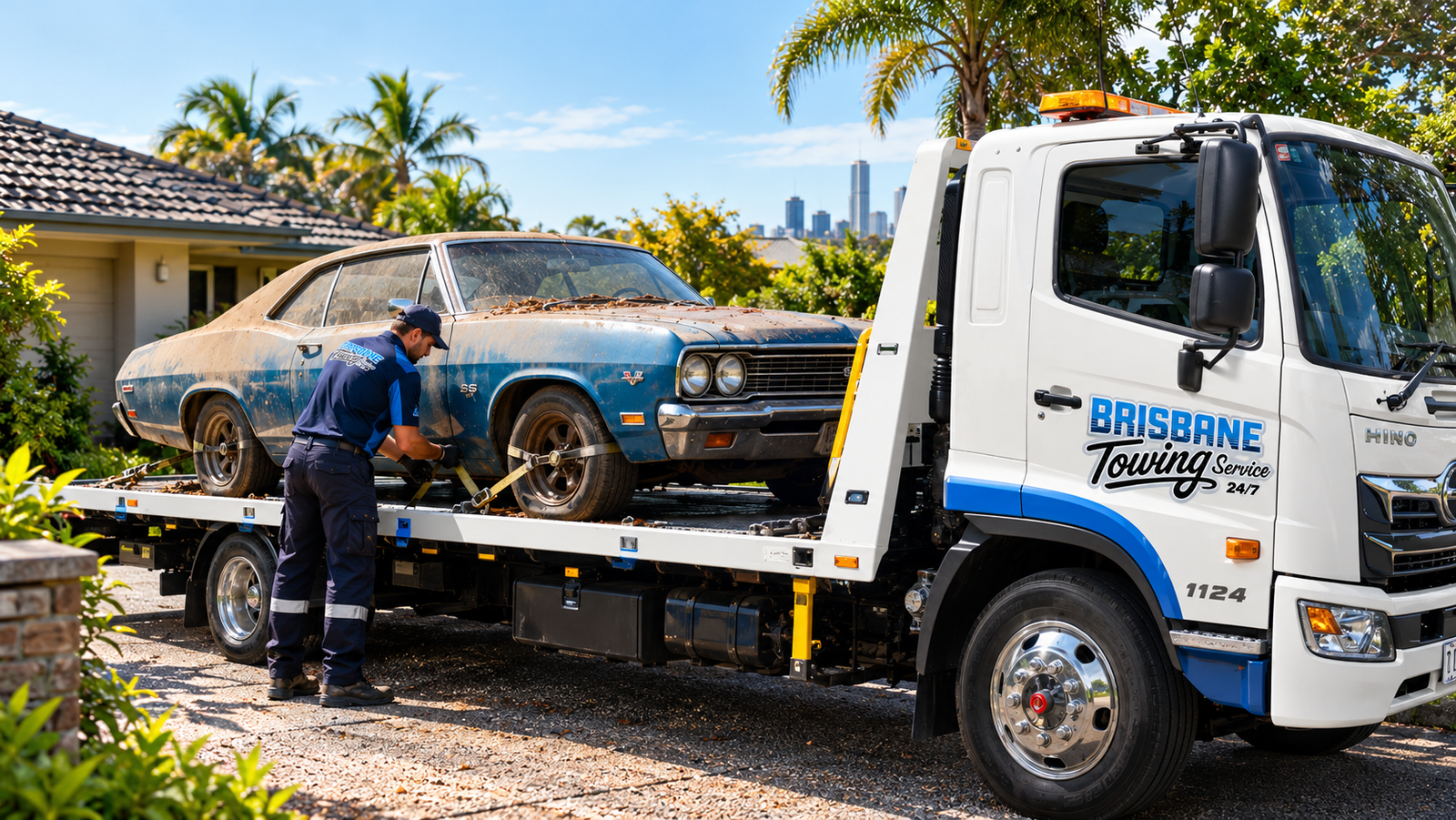
A car that has been standing for years shouldn't be asked to turn its own wheels at road speed. Old wheel bearings, perished tyres, dried-out brake seals and stiff suspension bushes are all unknowns, and a long tow on its own wheels tests every one of them. A flatbed or tilt tray removes that risk entirely by lifting all four wheels clear of the road. The car is winched on slowly from solid points on the chassis or frame, rather than a thin bumper, and secured with soft straps so nothing marks the paint or chrome.
Wheel-lift and hook-style towing is a poor fit for vintage vehicles. Slim chrome bumpers, bodywork that was never designed to be lifted and very low front ends are all easily damaged. For a car that won't roll at all, skates or dollies under the wheels, or a forklift at the pickup point, get it onto the deck without dragging a locked wheel across a concrete floor. Low-slung classics also need a shallow approach angle, which is why a low-angle tilt tray matters. Our lowered and sports car truck is built so nothing touches the lower body at any point, and you can see it on our Fleet page. That is the standard to expect from any vintage car towing Brisbane provider.
Preparing the Car and the Site Before the Truck Arrives
A little preparation saves a lot of effort on the day. If it's safe to do so, putting air in the tyres, even temporarily, often makes the difference between a car that rolls and one that has to be dragged. A seized handbrake or drum can sometimes be freed with patience, but forcing it or applying heat is how small problems become expensive ones, so leave it for the carrier or a mechanic if you're unsure. Disconnect the battery, remove or secure loose items inside the car, and check under the bonnet and in the exhaust for rodent nests, which are a common surprise in sheds that haven't been opened for years.
Then look at the site as honestly as you looked at the car. A shed door with limited clearance, soft ground after one of Brisbane's summer storms, a sloped yard, overhead wires or a narrow laneway can all change how the truck needs to approach. Mentioning these details when you book lets the driver plan the winching angle and the truck position in advance instead of working it out while the car is half out of the shed.
Open or Enclosed Transport for a Classic
Most owners ask early whether the car needs enclosed transport. For a rough project heading to a restoration workshop, a flatbed or tilt tray is usually all that's needed, and paying for an enclosed trailer on a car that has been sitting in a paddock or shed for years rarely makes sense. Enclosed transport earns its cost when the car is rare, freshly restored, high value or heading to a show, since it protects against stone chips, sun, road grime and Queensland's sudden hail and storm activity. A good carrier will give you an honest opinion on which suits your car instead of upselling you to the dearest option.
Choosing a Carrier When You're Asking for Classic Car Shipping Recommendations
Anyone who has posted on a car forum asking for a recommendation for classic car shipping will have seen the same replies come back: ask about experience with non-runners, ask what equipment they'll actually use, and don't choose on price alone. That advice holds up. A carrier who regularly moves classics will ask you detailed questions about the car's condition before quoting, because they know a vehicle that doesn't roll or steer is a different job to one that does.
Ask directly whether the company will be the one physically handling your car or whether the job gets passed to someone else. Ask what insurance covers the vehicle while it's on the truck and request confirmation in writing, particularly for a car with real value. A proper quote should state what's included, and the carrier should photograph the car at pickup and again at delivery so the condition is recorded on both ends. Be wary of a quote that is far lower than the rest, since that is usually a sign that equipment, insurance or care has been trimmed somewhere. Reviews from owners who've moved similar cars are worth more than any slogan, and a short phone conversation tells you a lot about how the job will be run.
Explore these helpful locations also:
Local and Interstate Classic Car Moves
Most classic car towing Brisbane jobs are local, a shed in the outer suburbs to a workshop, a mechanic to a panel shop, or one garage to another. These are usually short, straightforward and well suited to a single flatbed run. Interstate moves are a different matter, with more hours on the road, more planning around timing and a stronger case for confirming insurance and documentation before the truck leaves. If your car is heading to a show, a new owner or a restorer in another state, our long distance towing service covers the whole trip with the same flatbed approach.
Classic Car Storage Transport
Plenty of classics spend years in storage and then need to move, either into a storage facility or out of one when a restoration finally begins. Classic car storage transport has its own checklist. Confirm the facility's access hours and whether someone will be there to open up, check the clearance at the entrance and inside, and ask whether the car sits on tyres, stands or a cover, since a car that has been up on stands needs a different loading approach to one that has been resting on the floor. Brisbane's humidity is hard on stored cars, so a dry, ventilated space matters, and a photo record at the point of handover protects you if there's ever a question about condition later.
Paperwork, Insurance and Registration
A car that is carried on a truck isn't being driven on the road, so being unregistered doesn't stop it from being moved. If you plan to bring it back to life and drive it afterwards, though, check the registration and roadworthy requirements with Queensland Transport and Main Roads before assuming it can go straight onto the road. Have your proof of ownership and keys ready, and let your insurer know about the move. Many classic policies carry agreed-value cover, and it's worth confirming whether that extends to transit or whether the carrier's own insurance is the one responsible while the car is on the truck.
Moving Your Classic or Vintage Car With Brisbane Towing Service
A car that has waited years for its next chapter deserves a careful move. Brisbane Towing Service assesses every vehicle before it's loaded, matches the truck to the car and the site, and confirms the price and arrival time before anyone is dispatched. Whether it's a shed find that won't roll, a restored classic heading to a show or a shift into storage, call 0466 890 373 for a straight answer and upfront pricing, available 24/7 hours across Brisbane and surrounding suburbs.
Faq’s
How is a classic car that has been sitting for years moved safely?
The safest method is a flatbed with a winch and wheel skates. The car is lifted off the ground and loaded slowly, so nothing is forced to roll or turn. This is the standard approach for classic car towing Brisbane owners should expect, especially when the tyres are flat or the brakes are seized.
Can a classic car with flat tyres be towed?
Yes. The operator places skates or dollies under the flat wheels, which lifts them so the car can be loaded without damaging the tyres or rims. Pushing or rolling the car on flat tyres is best avoided, because old rubber can split and the wheel itself can be damaged.
Is roadside assistance enough for a long-stored classic?
Roadside assistance is built mainly for working cars that break down on the road, and it often has limits on vehicle type and access. A car that has been sitting for years usually needs an operator with a low-angle flatbed, a winch and wheel skates, so a dedicated towing provider is generally the safer choice.
Why is a flatbed better than a standard tow truck for a classic car?
A flatbed carries the whole car, so there is no pressure on the bumpers, suspension or drivetrain. Hook-and-chain or wheel-lift methods can stress parts that are already weak on an old car, which is why flatbeds are preferred for vintage car towing Brisbane owners rely on.
How much does classic car towing in Brisbane cost?
The price depends on the distance, the car’s condition, access at both ends and whether winching or skates are needed. A reliable operator will ask about the car first and confirm the total price before the truck is sent.
Do I need special insurance to move a classic car?
It is worth checking. Ask your insurer whether the car is covered in transit and while it is stored, and ask the operator what transit insurance they carry for the car’s real value.
What should I look for in a recommendation for classic car shipping?
Look for a company that uses a flatbed or enclosed carrier, provides a written condition report at pickup and delivery, carries suitable transit insurance and has genuine reviews. Classic car clubs and restoration workshops are also a good source of honest recommendations.