
If you have ever watched a piece of machinery come off a transport truck with scrape marks that were not there when it was loaded, you already understand why machinery lashing and blocking matters. The equipment did not move because of bad luck. It moved because the restraint system was not right for the load — and something shifted on a Brisbane road before it was stopped.
Machinery lashing and blocking Brisbane operators deal with is governed by real performance standards, not guesswork. The National Heavy Vehicle Regulator's Load Restraint Guide 2025 sets out exactly what a restraint system must achieve — and the numbers are specific. When you understand what the standards require and why, the difference between a professional machinery transport job and a risky one becomes immediately obvious.
This is what every Brisbane business owner, site manager, and transport coordinator needs to know before their equipment goes on a truck.
What Lashing and Blocking Actually Mean
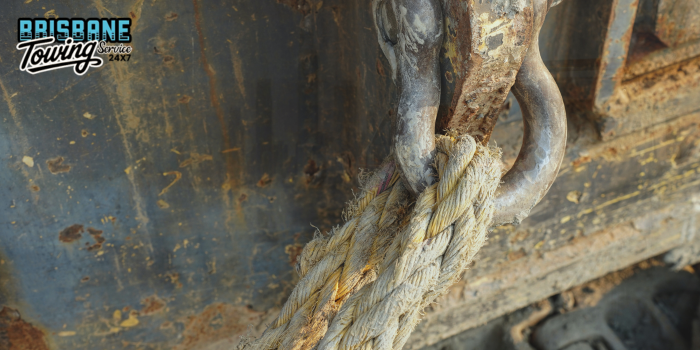
Lashing is any device used to tie the machinery to the transport vehicle. Chains, webbing straps, ratchet straps all of these are for lashings. They apply tension to hold the load in place and prevent movement in the forward, rearward, and sideways directions.
Blocking is where the vehicle body structure or a rated attachment physically prevents the load from moving. A headboard at the front of the trailer deck is a form of blocking. Timber or steel dunnage wedged against the machine's wheels or chassis is blocking. Wheel chocks that prevent a wheeled machine from rolling are blocking.
A properly designed restraint system for heavy machinery almost always uses both — lashing to secure, blocking to contain. Using one without the other, or using either one incorrectly, creates a restraint system that does not meet the legal performance standards and does not adequately protect the machinery or the road users around it.
How Blocking Works for Common Brisbane Machinery
Different machines require different blocking approaches. Here is what effective blocking looks like for the equipment we most commonly transport across Brisbane.
Forklifts
A forklift on a tilt tray needs wheel chocks behind and in front of all four wheels, plus lashings through the designated frame points. The mast should be in the lowered transport position with forks down and tilted back. A forklift with the mast raised has a significantly higher centre of gravity and is far more prone to tipping during transport — particularly on Brisbane's elevated sections of the Gateway Motorway where crosswinds are a factor.
Bobcats and Skid Steers
Tracks or tyres need to be chocked. The bucket or attachment should be in the lowered, transport position to reduce the centre of gravity. Lashings go through the machine's frame points — not the bucket, not the lift arms, not any hydraulic component.
Generators and Compressors
These are frequently transported without adequate blocking because they look stable when stationary. A generator on a flat trailer deck with no blocking relies entirely on the lashings — which means the full forward restraint of 0.8g has to come from the straps alone. Rated dunnage blocks on all four sides, combined with lashings, distributes the load correctly and keeps the machine in position through Brisbane's stop-start traffic and motorway merges.
Scissor Lifts and Boom Lifts
Platform in the fully lowered position. Outriggers or stabilisers retracted. Wheel chocks in place before lashings are applied. These machines have a high centre of gravity even in the transport position and are sensitive to cornering forces — the 0.5g sideways requirement is the most demanding element for this equipment type.
Don’t forget to check out these resources:
Caravan Tow Hitch Types And Coupling Systems Explanation
Car Battery Completely Dead In Brisbane: What to Do Next
Tow Truck Cost Gold Coast: 2026 Pricing Guide
Mining Truck Transport In Queensland
Checking Lashings During Transport
One detail that gets overlooked on longer Brisbane transport jobs is lashing tension check.
Lashings settle under load. A ratchet strap that was tight at the yard may have relaxed after the first few kilometres as the machinery settles into its position on the trailer deck. The NHVR guide recommends checking lashing tension shortly after moving off and again periodically during the journey.
For machinery transport across longer Brisbane corridors — from industrial estates in Rocklea or Wacol through to delivery points on the Sunshine Coast or Gold Coast — a lashing check at the first suitable rest stop is best practice. It adds minutes to the journey and potentially prevents a significant incident.
What Happens When the Restraint System Fails
We have attended the aftermath of machinery restraint failures on Brisbane roads and the consistent factor is not the specific machine type or the specific road — it is the restraint system not meeting the performance standards that the journey actually demanded.
A compressor that shifted on the Ipswich Motorway during emergency braking. A forklift that moved sideways on a tilt tray through a roundabout in an Eagle Farm industrial estate. A generator that rolled when a ratchet strap released on the Gateway. In every case, the restraint system was inadequate for the forces the journey placed on it.
The consequences are not just equipment damage. A machine that shifts on a transport vehicle affects the vehicle's handling. A machine that falls from a transport vehicle on a Brisbane road creates a road hazard that endangers every other driver in the area. Chain of responsibility laws in Queensland mean that the person who loaded the machine, the driver who transported it, and the business that engaged the transport can all face liability for a restraint failure.
Why Professional Machinery Transport in Brisbane Matters
Machinery lashing and blocking Brisbane operators who do this professionally approach every job with the weight, dimensions, and centre of gravity of the specific machine in mind — before a single strap is picked up.
The lashing points are identified and confirmed as rated for transport use. The blocking arrangement is designed for the specific machine and the specific trailer. The lashing angles are checked. The capacity of each lashing is verified against the NHVR performance standards for the machine's weight. And the restraint system is checked after the first few kilometres before the journey continues.
This is what separates a professional machinery transport job from a rushed one — and it is the difference your equipment and your liability exposure deserves.
Brisbane Towing Service 24/7 provides reliable tow trucks in Brisbane for machinery transport across Brisbane and Southeast Queensland. Our operators understand load restraint requirements, use rated lashing and blocking equipment appropriate to each machine, and complete every machinery transport job in compliance with the NHVR Load Restraint Guide 2025.
For tow trucks for machinery in Brisbane that handle the restraint correctly from loading to delivery — Brisbane Towing Service 24/7 is the call to make.