
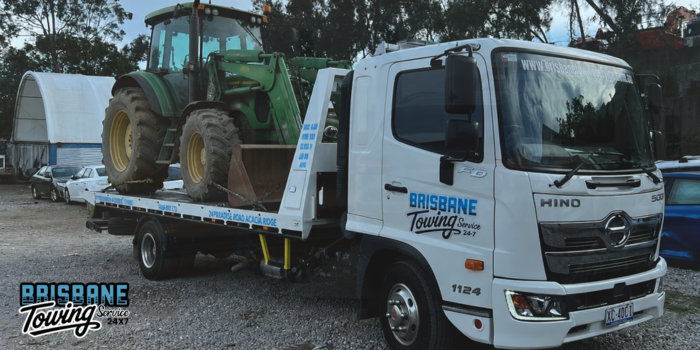
Agricultural machinery transport isn't like moving a car or a trailer — a tractor, header, or slasher brings its own weight, width, and handling problems that most general towing operators simply aren't set up for. Around Brisbane's rural fringes, from Ipswich paddocks to hobby farms further out past Karawath, we see the same set of problems come up again and again. Farmers and equipment owners want the job done properly by a tow truck company that actually understands heavy equipment, but they also don't want to pay through the nose for it — which is exactly why cheap towing in Brisbane that still does the job right matters so much in this space. Here are ten of the most common agricultural machinery transport challenges we deal with, and how Brisbane Towing Service (BTS) handles each one.
Oversized And Overweight Loads
Tractors, headers, and balers are often wider, taller, or heavier than what a standard trailer or truck can carry safely. Moving equipment outside standard dimensions brings its own set of load limits and permit requirements.
How BTS manages it: We assess the machine's dimensions and weight before the job, not on the day, and match it to a truck and trailer combination rated for the load — low loaders for heavy tractors, drop decks for taller implements — so nothing is guessed on the fly.
Uneven or Unsealed Farm Access
A lot of farm machinery transport starts on gravel driveways, paddock tracks, or sloped yards rather than a flat, sealed surface. Loading gear onto a low deck from an uneven surface is where damage and tip-overs most often happen.
How BTS manages it: Our drivers check access and ground conditions in advance where possible, and use loading ramps and positioning suited to soft or sloped ground rather than assuming every pickup point will be flat concrete.
Securing Irregularly Shaped Equipment
Unlike a car, agricultural machinery rarely has straightforward, symmetrical tie-down points. Attachments, booms, and folding sections all need to be accounted for separately.
How BTS manages it: We restrain every load to Australian load restraint standards, using chains and straps rated for the specific weight and shape of the machine — not a one-size-fits-all approach.
Route Planning Around Height and Width Restrictions
Some agriculture equipment transport jobs run into low bridges, narrow rural roads, or width-restricted routes that aren't obvious until you're already committed to a road.
How BTS manages it: Routes are planned ahead of time based on the machine's actual dimensions, factoring in known restrictions across Brisbane, Ipswich, Hillcrest, and Woodridge, rather than relying on a generic GPS route built for cars.
Working Around Peak Farming Seasons
During planting or harvest, machinery downtime is expensive, and transport delays can push back an entire operation.
How BTS manages it: We prioritise clear, realistic scheduling and keep communication open on timing, so equipment owners know what to expect rather than being left guessing during their busiest weeks.
Loading and Unloading Precision
Getting a header or tractor on and off a trailer safely takes more than pointing it forward and driving up a ramp — misjudged angles or speed can damage hydraulics, tyres, or the machine's undercarriage.
How BTS manages it: Our operators are experienced specifically with agricultural equipment, not just general vehicles, so loading and unloading is done slowly and deliberately, with someone guiding the process rather than working solo and rushed.
Weather-Related Delays and Damage
Rain turns paddock access into a genuine hazard, and exposed machinery can suffer rust or electrical issues if it's left uncovered during transport.
How BTS manages it: We monitor conditions before a job and reschedule where ground access genuinely isn't safe, rather than pushing ahead and risking a bogged truck or a damaged load.
Regulatory Compliance on Public Roads
Farm machinery moving onto public roads needs to meet roadworthiness and safety standards, and non-compliance can mean fines or delays.
How BTS manages it: We keep our fleet and processes aligned with current transport regulations, so equipment owners aren't the ones left managing compliance on a job that isn't their area of expertise.
Coordinating Multiple Pickup or Delivery Points
Some jobs involve collecting machinery from one property and delivering to another, sometimes with a dealer, repairer, or auction site in between.
How BTS manages it: We plan multi-point jobs as a single coordinated run rather than treating each leg separately, keeping the owner updated at each stage instead of going quiet between stops.
Balancing Cost With Proper Handling
The most common tension in agricultural machinery transport is cost versus care — cheaper operators sometimes cut corners on restraint, route planning, or equipment matching to hit a lower price.
How BTS manages it: We keep our pricing straightforward and competitive without cutting the steps that actually prevent damage. Cheap towing in Brisbane shouldn't mean rushed loading or mismatched equipment — it should mean fair pricing on a job still done properly.
Locations We Cover for Agricultural Machinery Transport
BTS regularly handles agricultural machinery transport and farm equipment relocation across Ipswich, Hillcrest, Woodridge, Forestdale, and Karawath, along with surrounding rural and semi-rural pockets of greater Brisbane. If your property sits outside these areas, it's still worth a call — most rural routes around Brisbane fall within our regular coverage.
Get Your Machinery Moved Properly
Agricultural machinery transport isn't a job to hand to whoever answers the phone first. If you've got a tractor, header, or other piece of equipment that needs to move, get in touch with Brisbane Towing Service or check our Machinery Towing page for more on how we handle heavy equipment moves. Call 0466 890 373 to talk through your job before you book.