
Every driver towing a trailer, caravan, or boat on Brisbane roads should understand one fundamental truth — the gear you select while towing is just as important as the equipment you attach to your vehicle. In Queensland, professional towing services operate under a regulated fee structure to protect drivers from being overcharged during stressful roadside situations. The current regulated towing fee in Queensland is $433.30 for the first 50 kilometres, and $8.60 for each kilometre beyond that. Knowing this gives Brisbane drivers confidence when dealing with towing companies after a breakdown or accident. But beyond professional towing fees, if you are the one behind the wheel towing a trailer yourself, understanding towing gear Brisbane conditions demand — from gear selection to the right towing ratio — is what keeps you, your vehicle, and everyone around you safe on the road.
What Does "Towing Gear" Actually Mean?
When people talk about towing gear, they are referring to two distinct things — the physical equipment used to connect and tow a vehicle or trailer, and the transmission gear settings used while towing. Both are equally important for safe towing on Brisbane roads.
Towing equipment includes
-
Towbar and tow ball (rated to match your trailer's ATM)
-
Safety chains — one for trailers under 2,500 kg, two for heavier loads
-
Trailer brakes (required for trailers over 750 kg GTM in Queensland)
-
Towing mirrors — mandatory if your trailer is wider than your vehicle
-
Electrical connectors for trailer lights and brakes
-
Weight distribution hitch — recommended for heavy caravan towing
Transmission gear selection includes
-
Using Tow/Haul mode on automatic vehicles
-
Selecting the correct gear range on manual transmissions
-
Knowing when to drop a gear on hills and motorways
-
Turning off overdrive during sustained towing
Getting both of these right is what separates safe, confident towing from dangerous, vehicle-damaging towing on Queensland roads.
The 80/20 Rule for Towing — Start Here Before You Select a Gear
Before talking about gear selection, every Brisbane driver who tows needs to understand the 80/20 rule for towing. This rule states that you should only tow up to 80% of your vehicle's maximum rated towing capacity — keeping a 20% safety buffer for real-world driving conditions.
So if your HiLux, Ranger, or LandCruiser is rated to tow 3,500 kg, your practical safe towing limit under the 80/20 rule is 2,800 kg.
That 20% buffer accounts for:
-
Passenger and cargo weight inside your tow vehicle
-
Fuel, tools, and equipment adding unaccounted mass
-
Queensland's wet season conditions and crosswinds
-
Brisbane's stop-start motorway traffic and steep suburban hills
-
Emergency braking situations where every kilogram counts
Applying the 80/20 rule before you hitch up means your vehicle is never operating at its mechanical limit — which directly affects how your transmission, engine, and braking system respond when you select the right towing gear. A vehicle towing within its 80% limit responds predictably to gear changes. A vehicle towing at 100% capacity does not.
Towing Gear Brisbane Roads Demand — Automatic Transmissions
The majority of towing vehicles on Brisbane roads today are automatic — and modern automatic transmissions are genuinely well-suited to towing when used correctly.
Tow/Haul Mode — Use It Every Time
Most modern utes and SUVs popular in Brisbane — the Toyota HiLux, Ford Ranger, Mitsubishi Triton, Isuzu D-MAX, and Toyota LandCruiser — are fitted with a Tow/Haul mode button or setting. Activating this mode changes how the transmission behaves while towing in several important ways:
-
It delays upshifts so the engine stays in a stronger power band
-
It increases engine braking when you lift off the throttle
-
It reduces gear hunting on hills, preventing the transmission from constantly shifting up and down
-
It applies transmission braking on descents, reducing the load on your wheel brakes
On Brisbane's motorway network — the M1, Ipswich Motorway, and Logan Motorway — Tow/Haul mode is particularly valuable during the acceleration required for merging and the sustained braking needed when approaching tolls and exits with a loaded trailer.
Rule: If your vehicle has Tow/Haul mode, engage it before you start moving with a trailer attached. Turn it off after you disconnect.
Turn Off Overdrive
Overdrive is the highest gear in an automatic transmission — designed for fuel efficiency at highway speeds without a load. When towing, overdrive causes your transmission to hunt constantly between gears, generating heat and unnecessary wear. Turn overdrive off for the duration of any towing run in Brisbane.
Towing Gear for Manual Transmission Drivers
Manual transmissions give the driver direct control over gear selection — an advantage when used correctly on Brisbane's varied road network.
General gear selection rules for manual towing:
-
Flat roads and highway cruising: Use your highest comfortable gear that keeps the engine in its torque range — typically 4th or 5th depending on load and speed
-
Uphill grades (like Mount Coot-tha, Paddington, or Springfield approaches): Drop one or two gears before the incline — do not wait until the engine is struggling
-
Downhill grades: Select a lower gear before descending — use engine braking to control speed rather than relying on your wheel brakes alone
-
Stop-start Brisbane traffic: Stay in lower gears — do not try to pull from low speed in a high gear with a loaded trailer behind you
-
Motorway merging: Drop to 3rd or 4th to build speed quickly and confidently before merging
The biggest mistake manual drivers make when towing is staying in too high a gear for too long — causing the engine to labour, the clutch to slip, and the transmission to overheat.
Understanding Towing Gear Ratio
The towing gear ratio refers to the mechanical relationship between your vehicle's axle gearing and the load being pulled. A lower gear ratio provides more pulling torque — essential for heavy trailer towing. A higher gear ratio prioritises speed and fuel economy over pulling strength.
For towing gear Brisbane conditions, here is what gear ratio means in practice:
-
Vehicles with a lower rear axle ratio (e.g., 3.7:1 or 4.1:1) produce more pulling torque and are better suited for heavy trailer towing on hilly terrain
-
Vehicles with a higher axle ratio (e.g., 2.7:1 or 3.0:1) are better for light loads on flat highway runs
When buying a tow vehicle or checking your current vehicle's suitability, always check the manufacturer's recommended towing gear ratio specification in your owner's manual. This figure directly affects how your vehicle performs under the towing loads common on Southeast Queensland roads.
Towing Gear Near Me — Getting the Right Equipment in Brisbane
Finding quality towing gear near me in Brisbane is straightforward, with most major automotive retailers and towbar fitting specialists operating across the city and surrounds. Before purchasing any towing equipment, confirm:
-
Your towbar is rated to match or exceed your trailer's Aggregate Trailer Mass (ATM)
-
Your tow ball is the correct size — 50mm is standard in Australia
-
Your electrical connector matches your trailer's plug type (7-pin flat is most common)
-
Your safety chains are the correct rated capacity for your trailer weight
-
Your trailer brakes are correctly adjusted and functional before any Brisbane road use
Fitting the wrong or under-rated towing gear is both dangerous and illegal in Queensland. Always have your towbar professionally fitted and certified — particularly for heavier towing applications.
When You Need a Professional Tow Truck in Brisbane
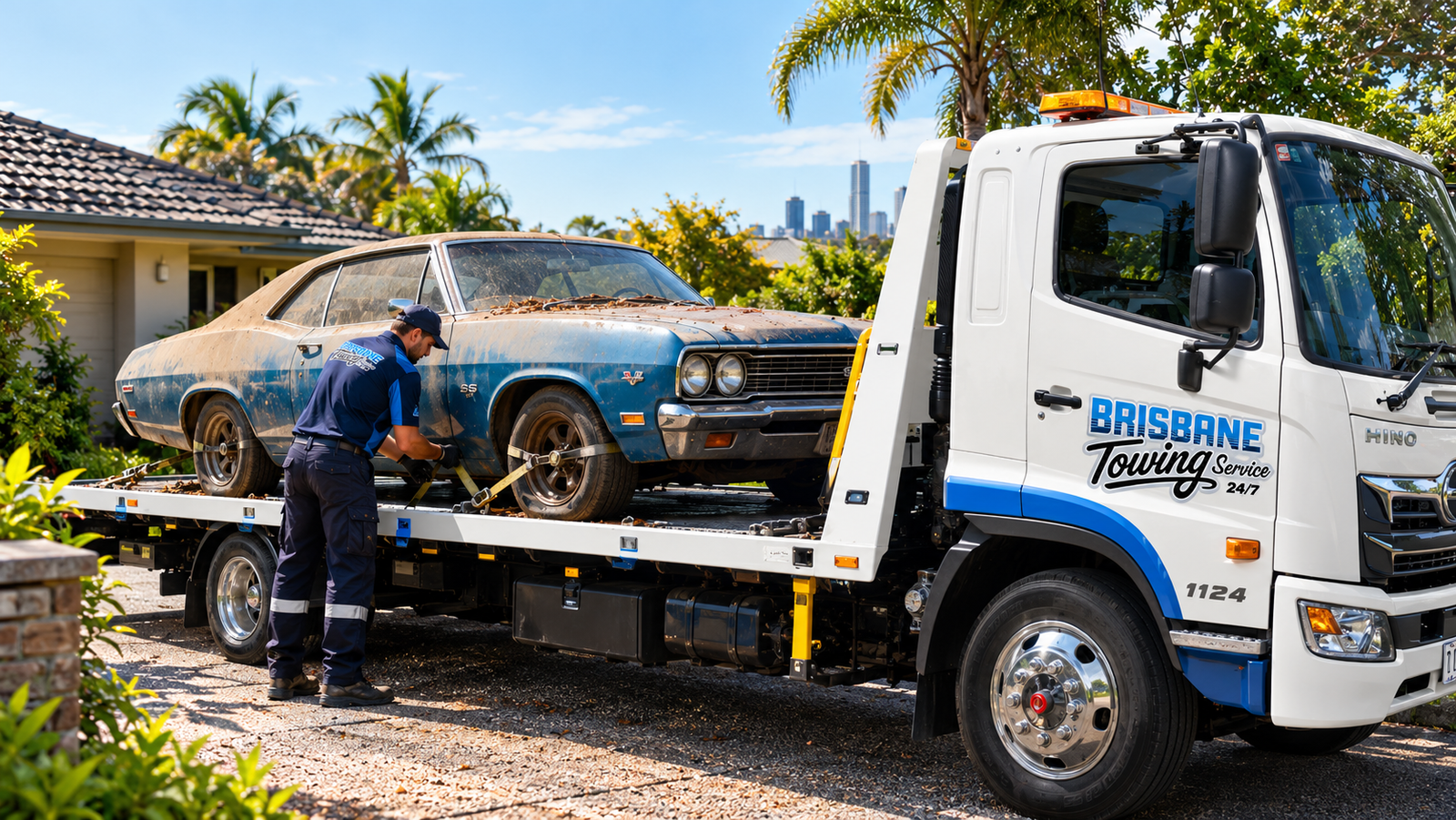
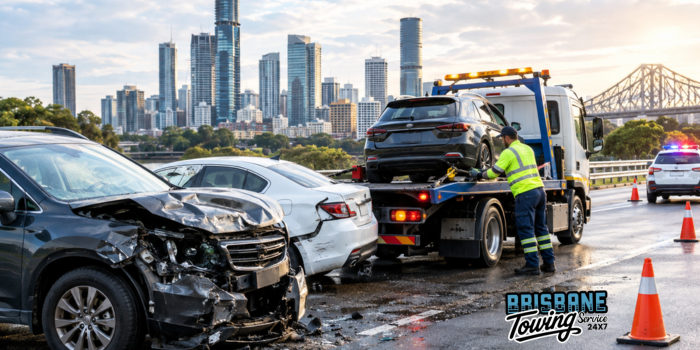
Understanding towing gear is essential for drivers who tow their own trailers and caravans. But when your vehicle breaks down, has been in an accident, or cannot be safely driven — that is when you need a professional towing service with the right equipment and experience for Brisbane road conditions.
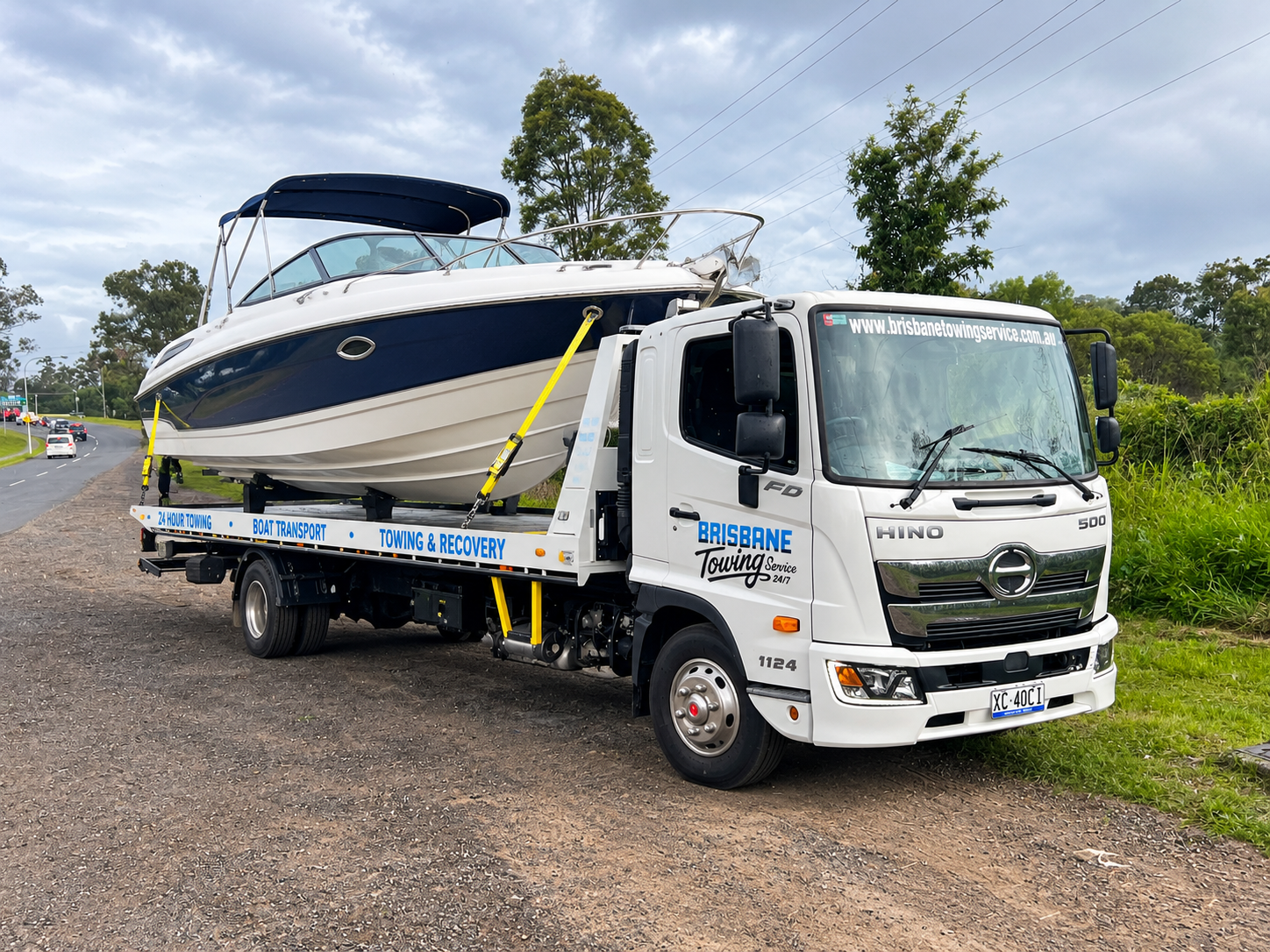
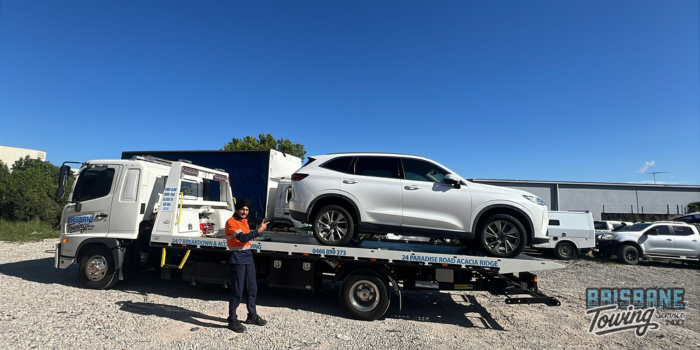
Brisbane Towing Service operates 24 hours a day, 7 days a week across Brisbane, Logan, Ipswich, and the Gold Coast. Our flatbed tow trucks are equipped for all vehicle types — from standard passenger cars to lowered vehicles, caravans, and light commercial vehicles.
With Queensland's regulated towing fee structure in place — $433.30 for the first 50 km and $8.60 per kilometre after that — you can call us with complete confidence in transparent, fair pricing on every job.
Call us now: 0466 890 373
Available 24/7 — Brisbane, Logan, Ipswich, and Gold Coast. Starting from $99 for local tows. Fully licensed and insured.